Task 1- Brand focus
McDonald’s® is the global’s top fast food restaurant chain with more than 260 restaurants in Malaysia. It has more than 12,000 Malaysian employees in their workforce (McDonald’s Malaysia 2018).
According to The Economic Times (2018), Product Life Cycle can be explained as the cycle through which every product experience from introduction to withdrawal or eventual demise. Product Life Cycle consists of four stages which are the introduction, growth, maturity and decline stages. Thus, a company will need to adopt to various marketing strategies to maximise their profit and market share when its product is at each life cycle stage (Chen 2017).
McDonald’s® started their operation in year 1955 which is founded by Ray Kroc (McDonald’s 2018). It was at its introduction stage as McDonald’s just opened its first restaurant. In other words, Chen (2017) mentioned that introduction stage is also known as development stage whereby a new product has just been introduced and exposed into a market. Moving on to the growth stage, it can be seen when McDonald’s® turned into the largest restaurant organisation globally with more than 33,000 McDonald’s® restaurants in 119 countries (McDonald’s 2018). At maturity stage, statistics obtained from Statista (2019) shows that McDonald’s revenue is declining from year 2014 till 2018. According to Chen (2017), decline stage is where the introduction of new products to replace the old products that are losing their competitiveness as they are being replaced. McDonald’s® is currently not at this stage as it is not replaced by other fast food chains.
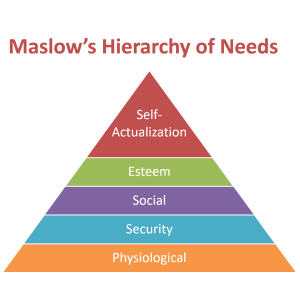
There are 5 levels in Maslow’s Hierarchy of Needs which are physiological, security, social, esteem and self-actualization needs. The basic level of needs is physiological needs. To illustrate, McDonald’s® have fulfilled this need as they serve food and beverages to customers along with their mission which is “to be our customer’s favourite place and way to eat” (McDonald’s 2018). Next, the second level is safety-security needs. Taormina and Gao (2013) suggests that the types of warnings that could gain the safety–security response and the circumstances that fulfil these needs is essential to be recognised. For example, customer’s information collected when using their app includes personal details, housing address and card details are secured as private and confidential. This can be seen when McDonald’s® stated that they will treat personal details as private and confidential and will not expose the information to anyone outside of the McDonald’s Family. Therefore, safety-security needs are satisfied. For social needs, it is defined as the need of human beings to have interpersonal bonds and to feel a sense of belonging with other people is considered important to the homo sapiens (Taormina and Gao 2013). McDonald’s® strives to make each customer to feel good when they visit their restaurants (McDonald’s 2018). Moving on to esteem needs, it is the respect that one gains from own self and others. McDonald’s® has earned its respect when it is awarded the Halal CSR Excellence Award at the World Halal Conference 2019 in April (McDonald’s 2018). The highest level of need is self-actualization. According to McDonald’s (2018), they have 36,000 restaurants worldwide, making it to be everywhere and the top of fast food’s food chain.
Gannon, Taheri and Olya (2019) describes that experiential consumption is often social, supported by the interactions among consumers. For example, McDonald’s are using licensing in their Happy Meal toys (McDonald’s 2018). By having different toys from time to time, customers will increase their purchase due to experiential consumption. To illustrate, a customer may tell another customer on the recent Happy Meal toy that attracts attention and interest. As a result, this action motivates others to consume or purchase the product. According to Nardini, Lutz and LeBoeuf (2019), companies may place more focus on their experiential offerings to intensify their customers’ experiences. Therefore, experiential consumption is delivered.
Task 2- CB concept focus

Issue
Nivea® was involved in a serious issue as their advertisement was offensive and inappropriate. In an article by Wang (2017), Nivea has deleted their deodorant ad that has the tagline “White Is Purity”. It was done after some people objected that the slogan is considered as racist. Besides, others took over Nivea’s online campaign with comments about white supremacy.
Due to this issue caused by racist ads, it has lead to boycott of customers. By applying the Product Life Cycle theory, Nivea was at its decline stage where customers do not buy and use their products. It can be concluded that their racist ads drove sales down not only in that particular year, but also in the following years.
Viral Marketing

Dove’s Beauty Sketchers campaign

According to Bhattacharyaa, Gaurav and Ghoshc (2019), viral marketing can be defined as current marketing strategy that is being used to communicate with customers, which has the capability to reach a vast audience in a very efficient manner. Besides, Internet word-of-mouth marketing is the synonym for viral marketing (Bhattacharyaa, Gaurav & Ghoshc 2019). This is because it stimulates people in information-sharing. This can be done by sharing information with their friends through email or other social media, and uses available social networks as claimed by Bhattacharyaa, Gaurav and Ghoshc (2019). The brand that has viral marketing is Dove. Within 12 days of its release, Dove’s Real Beauty Sketches video has more than 50 million people views (Dove 2019). Based on Dove’s (2019) official website, Real Beauty Sketches has been viewed almost 180 million times to date. The theory that best suit Dove’s video under Maslow’s Hierarchy of Needs is self-actualization. Based on Taormina and Gao’s (2013) article, self-actualization is people’s desire for self-fulfilment, in other words, the likelihood for them to actualize in what they can possibly are. Dove (2019) mentioned that the aim of the film is to inspire women who feel anxious about their looks to reconsider their view of their own beauty and always keep in mind that they are more beautiful than they think.
PEST
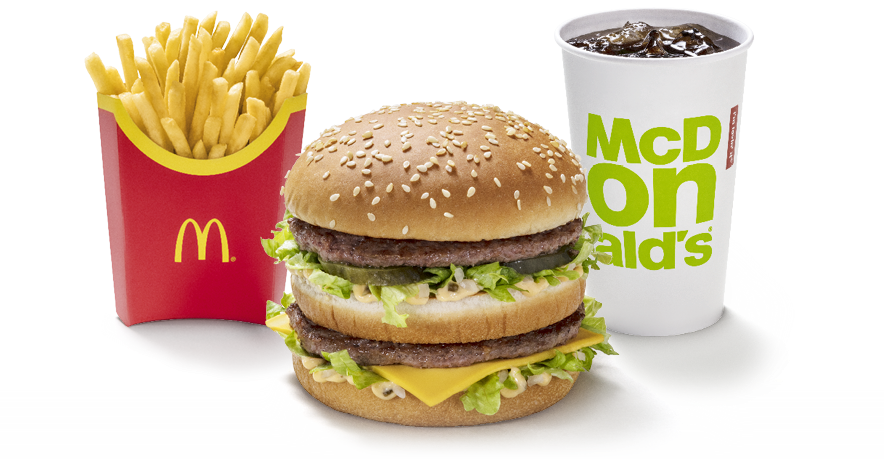
According to Schiffman and Wisenblit (2015), political, economic, social and technological are the four criteria included in the PEST analysis Among the four factors, the factor that can be related to McDonald’s is social. To elaborate, demographic for McDonald’s can be seen when it is targeted to children. This is due to the reason that adults are perceived as more health conscious and it is a less desirable option for them.
Valencia, Cardenas and Acevedo (2019) mentioned that PEST analysis is a tool that aids in improving the decision-making process on a problem. McDonalds has many outlets in different countries (McDonald’s 2018). Every country has its own culture and norms and McDonalds ensures that the cultural and religious barriers are in serious consideration while formulating the food menus at their outlets, depending on the location. For example, McDonald’s has introduced special vegetarian meals to suit that market.
Reference List
Bhattacharya, S, Gaurav, K and Ghosh, S 2019, ‘Viral marketing on social networks: An epidemiological perspective’, Physica A: Statistical Mechanics and its Applications, vol. 525, pp. 478-490, DOI: 10.1016/j.physa.2019.03.008, accessed 4 May 2019, <https://pdf.sciencedirectassets.com/271529/1-s2.0-S0378437119X00072/1-s2.0-S0378437119302274/main.pdf?x-amz-security-token=AgoJb3JpZ2luX2VjEFoaCXVzLWVhc3QtMSJHMEUCIF%2BaH%2BCvDihKmuxx7DQ6s2ymJRULt2Wr4I6nmdADUwqkAiEAwip2hq36gJgT4o1ujIsZouMdq5nsQ8kdDuEv9c9wbRkq2gMIUxACGgwwNTkwMDM1NDY4NjUiDCVyKj4r32cwMMX2TCq3AzDlxWsw1niXLuyQzNWkEgoP%2BYJaFblQaBPLqHtMu8vCOrOV7yYfhj2y6L493VQfJRzmxDXs%2BOZI7Cc5guOrkef3jihnj6DzomoioVOTaP90gEzvHMeMGTJeM%2Bd2TU%2BAXZz1HMNS2ED0ZF9RuzQEktbfDn6DOGVjbzKjqm9bF56cx78CshEii3U7ehXhZgIC2ppE0iXV%2FgH6grciTi4F1sLHvvXt0lI1ntrcENl%2Fs1bMvX8gEpx2Q2gJE4Slli48%2FoeDLXrqzO9RkKcHJVmvdD6jAGC2%2FqfYjMW0Mw7HhS5hZu%2FXg%2FOX6lIF3MBO6piVOtrVEtwu5tOztnlljMyIhDUy5Ial2f8ijloHENrwFK61yDj4Zlv%2Br3WO%2BTgLd%2BXGZc9Ub7C4z0WF3aI6bnyHbgUnYf7QBRntCcBM3oQCYG%2FcvrlH66%2FDu6lrjulwFL7pxI40IqiK1pap%2BWFGgZpjcu7%2F8yJxi6hhLpIMbTwlGvfNgYFCMZZW2h0E13kn%2FZr6i3ys4SU7kzfmO4T%2BOFMo%2Bhe%2B8R6UCNh82NvV8opu4RqeI9%2BGh2G%2F3VLKYO6lGOAfZ%2Fa5W3lwMYEwsY3O5gU6tAFgFn8%2FDXxYI2oBvEuLlk3oWlyPoM%2B6OpMZnAzwzLoFz0CdKpPqniyI69AEjDmK1%2FEshn6lsy2rXEqaPLRd062tWmyM%2FHOYgQY0P%2BjTwy5Hecj8sa79G8lDG1rSZrMzvQwIgfvgBpd3GMKKdlBytjR3qqbRe3XLzF%2F7HxvW25beDr2mlYxqfDML%2F7AHTX2GkinJVctHvR69i7psFEPUY35bRARnVRh9a3Cbk%2BTQSUegBUigGZc%3D&AWSAccessKeyId=ASIAQ3PHCVTYSKCME6CS&Expires=1557369111&Signature=MnHjKHeCytFWdrJQb4DDYqCJit0%3D&hash=bdd731fb876c8801d80324b172d65344444d40da1632ab171861c6737472c069&host=68042c943591013ac2b2430a89b270f6af2c76d8dfd086a07176afe7c76c2c61&pii=S0378437119302274&tid=spdf-84985f35-cfc2-4169-807a-4ef39c039811&sid=0b8590f02ff9b049855b1065c28b1e441218gxrqa&type=client
Chen, BC 2017, ‘Study on establishment of product life cycle model of cultural creative product industrialization’, 2017 International Conference on Applied System Innovation (ICASI), ISBN: 1-5090-4898-7, 978-1-5090-4898-4, pp.1259-1262, DOI: 10.1109/ICASI.2017.7988125, accessed 6 May 2019, <http://ey9ff7jb6l.search.serialssolutions.com.ezproxy.uow.edu.au//?sid=Elsevier:Scopus&genre=proceeding&issn=&volume=&issue=&spage=1259&epage=1262&pages=1259-1262&artnum=7988125&date=2017&title=Proceedings+of+the+2017+IEEE+International+Conference+on+Applied+System+Innovation%3a+Applied+System+Innovation+for+Modern+Technology%2c+ICASI+2017&atitle=Study+on+establishment+of+product+life+cycle+model+of+cultural+creative+product+industrialization&aufirst=B.-C.&auinit=B.-C.&auinit1=B&aulast=Chen&id=doi:10.1109%2fICASI.2017.7988125>
Dove 2019, Dove Real Beauty Sketches, accessed 2 May 2019, <https://www.dove.com/us/en/stories/campaigns/real-beauty-sketches.html>
Gannon, M, Taheri, B and Olya, H 2019, ‘Festival quality, self-connection, and bragging’, Annals of Tourism Research, vol. 76, pp.236-252, DOI: 10.1016/j.annals.2019.04.014, accessed 3 May 2019, <http://ey9ff7jb6l.search.serialssolutions.com.ezproxy.uow.edu.au//?sid=Elsevier:Scopus&genre=article&issn=01607383&volume=76&issue=&spage=239&epage=252&pages=239-252&artnum=&date=2019&title=Annals+of+Tourism+Research&atitle=Festival+quality%2c+self-connection%2c+and+bragging&aufirst=M.&auinit=M.&auinit1=M&aulast=Gannon&id=doi:10.1016%2fj.annals.2019.04.014>
McDonald’s Malaysia 2018, About us, accessed 27 April 2019, <https://www.mcdonalds.com.my/>
Nardini, G, Lutz, RJ, LeBoeuf, RA 2019, ‘How and when taking pictures undermines the enjoyment of experiences’, Psychology and Marketing, vol. 36, no. 5, pp.520-529, DOI: 10.1002/mar.21194, accessed 27 April 2019, <https://onlinelibrary-wiley-com.ezproxy.uow.edu.au/doi/abs/10.1002/mar.21194>
Schiffman, LG and Wisenblit, JL 2015, Consumer Behaviour, 11th edn, Pearson, United States.
Statista 2019, ‘Revenue of McDonald’s Corporation worldwide from 2005 to 2018 (in billion U.S. dollars)*’, accessed 28 April 2019, <https://www.statista.com/statistics/208917/revenue-of-the-mcdonalds-corporation-since-2005/>
Taormina, RJ and Gao, JH 2013, ‘Maslow and the Motivation Hierarchy: Measuring Satisfaction of the Needs’, The American Journal of Psychology, vol. 126, no. 2, pp. 155-177, DOI: 10.5406/amerjpsyc.126.2.0155, accessed 4 May 2019, <https://www-jstor-org.ezproxy.uow.edu.au/stable/pdf/10.5406/amerjpsyc.126.2.0155.pdf?refreqid=excelsior%3A148caab9d8efc364c904d70a81658e35>
The Economic Times 2018, Product Life Cycle, accessed 27 April 2019, <https://economictimes.indiatimes.com/p/product-life-cycle/articleshow/20474094.cms>
Valencia, GE, Cardenas, YD & Acevedo, CH 2018, ‘PEST analysis of wind energy in the world: From the worldwide boom to the emergent in Colombia’, Journal of Physics: Conference Series, vol. 1126, no. 1, p. 012019, accessed 7 May 2019, <https://iopscience-iop org.ezproxy.uow.edu.au/article/10.1088/17426596/1126/1/012019/pdf>
Wang 2017, ‘Nivea’s ‘White Is Purity’ ad campaign didn’t end well’, The Washington Post, accessed 22 April 2019, <https://www.washingtonpost.com/news/business/wp/2017/04/05/niveas-white-is-purity-ad-campaign-didnt-end-well/?utm_term=.2a17ea9f89b9>

 Jayvyn's